
You open a mutual fund app, search for “best mutual fund,” and you are hit with hundreds of options — large cap, mid cap, flexi cap, index funds, hybrid funds, each with star ratings, past returns, and confusing names. You pick one based on a friend’s recommendation or a YouTube video, invest, and hope for the best.
If this sounds familiar, you are not alone. Most first-time investors select mutual funds the wrong way — chasing last year’s top performer instead of understanding what actually makes a fund right for them. I have put together this guide to help you choose mutual funds the way a disciplined investor would — based on your goal, your risk capacity, and a few key fund-level checks that most people skip entirely.
Step 1 — Start With Your Goal, Not the Fund
Before you even open a mutual fund app, ask yourself — why am I investing this money, and when will I need it?
- Goal less than 3 years away (a vacation, a gadget, an upcoming expense) — equity mutual funds are not suitable. Use a liquid fund, short-duration debt fund, or even a fixed deposit
- Goal 3 to 7 years away (a car, a house down payment, a wedding) — a mix of hybrid funds and large-cap equity funds works better, balancing growth with reduced volatility
- Goal 7+ years away (retirement, child’s higher education, long-term wealth creation) — pure equity mutual funds like flexi-cap, mid-cap or index funds make sense, since you have time to ride out market volatility
This single step eliminates 80% of the confusion. A fund that is excellent for a 15-year retirement goal can be completely wrong for money that you might need in 2 years.
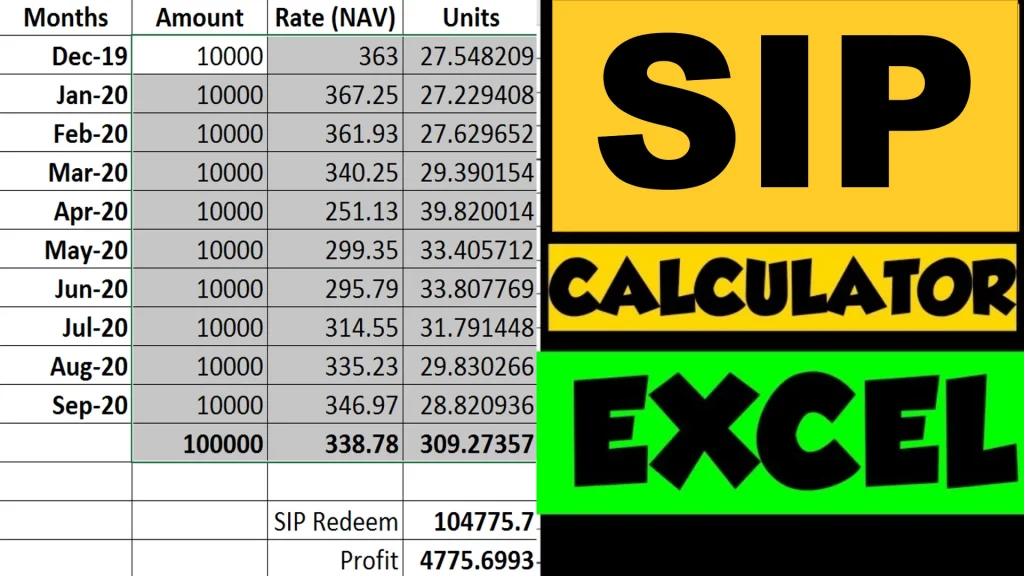
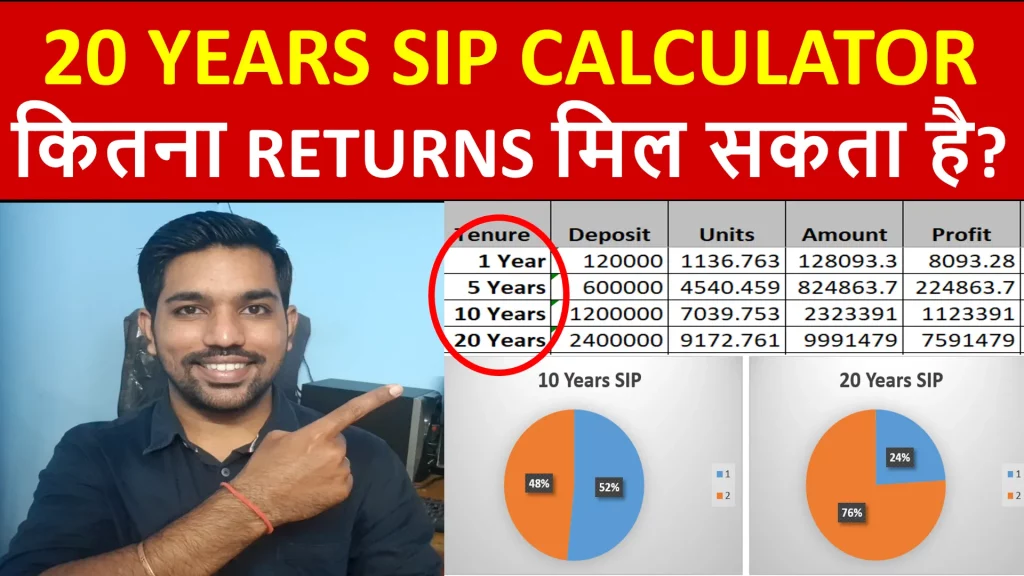
You can download the SIP Calculator in excel using below button to calculate returns on your SIP investment over long term from 5 years to 30 years
Step 2 — Understand the Fund Categories
SEBI classifies mutual funds based on the underlying strategy — active funds where a fund manager actively selects stocks, and passive funds that simply replicate an index like the Nifty 50 or Sensex.
Here is a simplified breakdown of the main categories you will encounter:
| Category | What it Invests In | Risk Level |
|---|---|---|
| Large Cap Fund | Top 100 companies by market cap | Moderate |
| Mid Cap Fund | Companies ranked 101-250 by market cap | High |
| Small Cap Fund | Companies ranked 251 and beyond | Very High |
| Flexi Cap Fund | Mix of large, mid and small cap | Moderate to High |
| Index Fund | Replicates an index like Nifty 50 | Moderate |
| ELSS | Equity with tax benefit under 80C | High, 3-year lock-in |
| Hybrid Fund | Mix of equity and debt | Low to Moderate |
| Debt Fund | Bonds, government securities | Low |
- Equity funds generally seek long-term capital appreciation, while income or debt funds aim to provide regular and steady income by investing in fixed income securities such as corporate bonds, debentures and government securities
- If you are a beginner with a long time horizon, a flexi-cap fund or a Nifty index fund is usually the simplest and most reliable starting point
ALSO READ: Types of Mutual Funds in India
Step 3 — How Do I Choose the Right Mutual Fund? (The 5 Key Checks)
This is where most people go wrong — they look only at past returns and ignore everything else. Here are the 5 things I check before recommending any fund.
1. Check the Direct Plan and Expense Ratio
Every mutual fund has two versions — Regular Plan and Direct Plan. Direct plans have no distributor commission built in, which means more of your money stays invested.
Only 28.4% of retail assets in India are currently in direct plans — the remaining 71.6% in regular plans represents structural wealth erosion that most investors are unaware of.
Index funds offer the lowest expense ratios at 0.04% to 0.15% in direct plans, while actively managed equity funds average 0.55% to 0.70%. Choosing direct plans over regular plans saves 0.30% to 0.95% annually — on a Rs. 10,000 monthly SIP over 20 years, this difference alone can mean Rs. 8 to 14 Lakh more in your final corpus.
This single decision — direct vs regular — has more impact on your long-term wealth than picking the “best” fund among similar options.
2. Check Past Performance — But Across Market Cycles
Evaluate the fund’s past returns over varying periods — 1, 3, 5 and 10 years. While past performance does not guarantee future results, it provides insight into how the fund has performed across different market cycles. Compare this to the category average and the benchmark index, and assess how the fund managed during both bull and bear phases.
A fund that gave 25% returns in one great year but collapsed badly in a market downturn is riskier than a fund that gave consistent 13-14% returns across both good and bad years.
3. Check the Fund House (AMC) Track Record
Choose a fund affiliated with a reputable AMC, characterised by a strong brand, extensive history, substantial asset base, high-quality research team, and reliable customer support.
You do not need to invest with the newest or flashiest fund house. A fund house with 15-20 years of track record managing investor money through multiple market cycles gives you more confidence than a fund launched two years ago promising extraordinary returns.
4. Check Fund Size — Not Too Small, Not Too Large
Very large funds may face issues like liquidity, diversification challenges and concentration risks, while very small funds may face viability challenges, lacking investor support for sustained existence and growth.
For mid-cap and small-cap funds especially, an extremely large fund size can become a problem — there are only so many quality mid-cap and small-cap stocks to invest in, and a bloated fund may struggle to deploy money efficiently.
5. Check the Risk-O-Meter and Risk Rating
Every mutual fund in India is required to display a Risk-o-Meter, ranging from Low to Very High risk, based on the fund’s actual portfolio holdings. Match this to your own risk appetite — if market volatility genuinely stresses you out, a Very High risk small-cap fund is not right for you, regardless of its past returns.
ALSO READ: What is Liquid Mutual Funds
How to Pick Which Mutual Funds to Invest In — A Simple Framework
If you are still unsure where to start, here is a simple framework recommended for most salaried beginners:
- Emergency fund first — before any mutual fund investment, make sure you have 3-6 months of expenses in a liquid fund or savings account
- One core equity fund — a flexi-cap fund or a Nifty 50 index fund as your foundation, since these offer broad diversification
- One tax-saving fund (if needed) — an ELSS fund if you want Section 80C tax benefit along with equity exposure
- Avoid overlapping funds — do not invest in 3-4 funds that all hold the same top 20-30 companies. This is not diversification, it is just extra expense ratio for the same exposure
- Review once a year, not every month — checking your portfolio daily leads to panic decisions during market dips. Annual review is enough for long-term goals
What is the 15 15 15 Rule in Mutual Funds?
This is one of the most searched concepts in mutual fund investing, and it is a useful way to understand the power of compounding.
The 15x15x15 rule says that if you invest Rs. 15,000 per month via SIP in an equity mutual fund capable of generating an average 15% return, you are likely to accumulate a corpus of around Rs. 1 crore in 15 years.
Your total investment over 15 years would only be Rs. 27 Lakh, but the power of compounding can grow this to over Rs. 1 crore — and if you continue for another 15 years with the same SIP and return assumption, the corpus can grow to approximately Rs. 10 crore.
Important reality check I want to add here: This calculation shows nominal wealth and does not account for inflation. If inflation averages 7% per year, Rs. 1 crore received after 15 years will have the purchasing power of only about Rs. 36 Lakh in today’s terms. The rule also does not subtract expense ratios and capital gains tax, both of which would reduce your final actual corpus.
So treat the 15 15 15 rule as a teaching concept about compounding and discipline — not a guaranteed outcome. The real takeaway is: start early, invest consistently, and give your money time.
What is the 7-5-3-1 Rule in SIP?
This is a newer, more practical framework that has gained popularity recently — and I find it more useful than the 151515 rule because it focuses on behaviour, not just numbers.
The rule is simple: stay invested for at least 7 years, diversify across 5 buckets, survive 3 emotional phases of poor returns, and increase your SIP by at least 1 step-up every year. It is not a return formula — it is a behaviour checklist, a set of habits that reduces the chances of making costly mistakes with your SIP.
Breaking down each part:
- 7 years — a CRISIL-AMFI study analysing 15 years of SIP data found that the probability of negative returns dropped sharply as the holding period increased — 25% for 1-year SIPs, dropping significantly for longer tenures. Longer SIP duration genuinely reduces your risk of losing money
- 5 buckets — diversify across genuinely different sources of return, not 5 funds that hold the same large-cap stocks. The common mistake here is picking funds that all invest in similar stocks — if you hold a large-cap fund, a blue-chip fund, and a flexi-cap fund, there is a good chance all three are buying the same top 20-30 companies. That is not diversification, that is portfolio overlap with extra expense ratios.
- 3 emotional phases — every long-term SIP investor goes through at least 3 periods of poor or negative returns. Surviving these without panic-selling is what separates successful long-term investors from the rest
- 1 step-up — increasing your SIP amount by at least one increment every year, in line with your salary growth, significantly boosts your final corpus compared to a flat SIP amount
I find this rule more honest than the 15 15 15 rule because it tells you what to do, not just what number to expect.
Common Mistakes to Avoid While Selecting Mutual Funds
- Chasing last year’s top performer — a fund that gave 40% returns last year is often a fund that took excessive risk, and risk does not always work in your favor the next year
- Investing in regular plans without realising it — always check if you are looking at the direct plan before investing
- Too many funds in the portfolio — 3 to 5 well-chosen funds covering different categories is enough for most individual investors. More than that becomes difficult to track and often results in overlap
- Ignoring your own risk tolerance — investing your entire emergency fund in small-cap equity because of high past returns, then panicking and selling during the next market correction
- Not linking the fund to a goal — investing without knowing why often leads to redeeming at the wrong time, usually during a market dip when you see your portfolio value falling
Frequently Asked Questions on Mutual Fund Selection
How do I choose the right mutual fund?
Start with your financial goal and time horizon, then choose a fund category that matches it. Check the direct plan expense ratio, review performance across both good and bad market cycles, verify the AMC’s track record, and confirm the fund’s risk level matches your own risk appetite.
What is the 15 15 15 rule in mutual funds?
It is a wealth-building illustration showing that investing Rs. 15,000 per month for 15 years at an assumed 15% annual return can grow into approximately Rs. 1 crore. It demonstrates the power of compounding but does not account for inflation, expense ratio, or taxes, which would reduce the actual final corpus.
How to pick which mutual funds to invest in?
Build your core portfolio around 1-2 diversified equity funds like a flexi-cap or index fund, add an ELSS fund if you need tax savings, avoid funds with overlapping stock holdings, and always verify you are investing in the direct plan to minimise costs.
What is the 7-5-3-1 rule in SIP?
It recommends staying invested for at least 7 years, diversifying across 5 genuinely different fund categories, being prepared to survive at least 3 periods of poor returns without panic-selling, and increasing your SIP amount by at least one step-up every year.
Is it better to invest in one large fund or multiple small funds?
Generally, 3 to 5 well-chosen funds across genuinely different categories is sufficient diversification for most individual investors. Spreading money across too many funds often leads to overlap and makes the portfolio harder to track without adding real diversification benefit.
Use Popular Calculators:
- Income Tax Calculator
- Home Loan EMI Calculator
- SIP Calculator
- PPF Calculator
- HRA Calculator
- Step up SIP Calculator
- Savings Account Interest Calculator
- Lump sum Calculator
- FD Calculator
- RD Calculator
- Car Loan EMI Calculator
- Bike Loan EMI Calculator
- Sukanya Samriddhi Calculator
- Provident Fund Calculator
- Senior Citizen Savings Calculator
- NSC Calculator
- Monthly Income Scheme Calculator
- Mahila Samman Savings Calculator
- Systematic Withdrawal Calculator
- CAGR Calculator
I’d love to hear from you if you have any queries about Personal Finance and Money Management.
JOIN Telegram Group and stay updated with latest Personal Finance News and Topics.
Download our Free Android App – FinCalC to Calculate Income Tax and Interest on various small Saving Schemes in India including PPF, NSC, SIP and lot more.
Follow the Blog and Subscribe to YouTube Channel to stay updated about Personal Finance and Money Management topics.
Disclaimer: Mutual Fund investments are subject to market risks, read all scheme related documents carefully. Registration granted by AMFI, membership of SIRO (if applicable), and certification from NISM in no way guarantee performance of the intermediary or provide any assurance of returns to investors.
Distributor Details: Name: Abhilash Gupta | AMFI Registered Mutual Fund Distributor | ARN: 367014
Save Home Loan Interest Amount!
Use Home Loan Excel Calculator that will help you to Save Interest Amount on Home Loan EMI.
Click below button to download Home Loan EMI and Prepayment Calculator in Excel:
Watch how Home Loan Calculator in Excel Works
Income Tax Calculator App – FinCalC
For Income Tax Calculation on your mobile device, you can Download my Android App “FinCalC” which I have developed for you to make your income tax calculation easy.
What you can do with this mobile App?
- Calculate Income Tax for FY 2025-26 and previous FY 2024-25
- Enter estimated Investments to check income tax with Old and New Tax Regime
- Save income tax details and track regularly
- Know how much to invest more to save income tax
- More calculators including PPF, SIP returns, Savings account interest and lot more